On this page
The short version
- We found no government document that uses "superintelligence" as official policy, with two exceptions: a UK private member's bill and, since 29 September 2026, a US order that renames AI.
- The EU is the only one with binding law that already covers the most powerful AI models.
- The US, India and China stress growth and sovereignty. The UK stresses security research. The UN advises.
- If you sell across borders, plan for the EU as a floor and watch the US states.
Who uses the word
Start with a surprise. When we searched the official texts of the EU, the UK government, China, India and the UN, we found almost no use of "superintelligence" as a policy term. Governments talk about "general-purpose AI", "frontier models", "systemic risk" and "loss of control". The exceptions are:
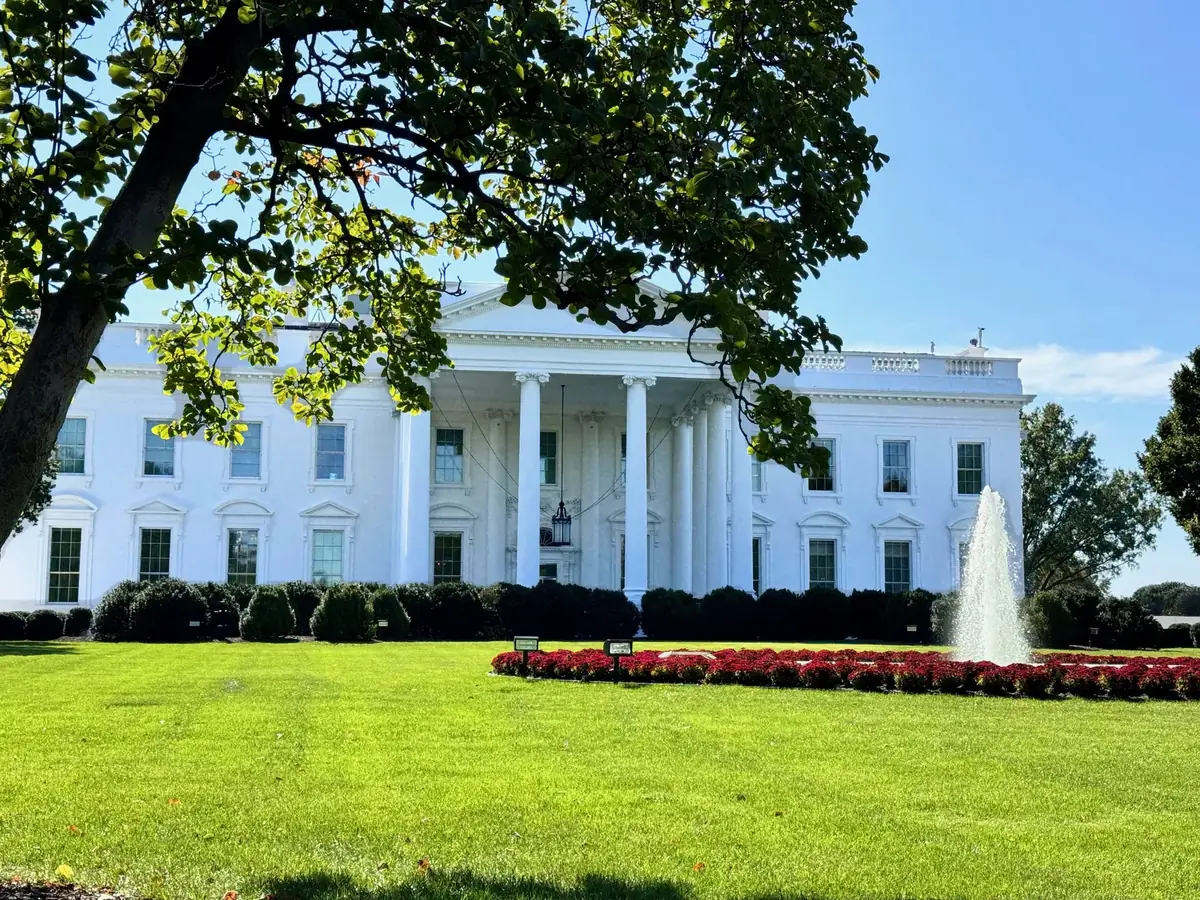
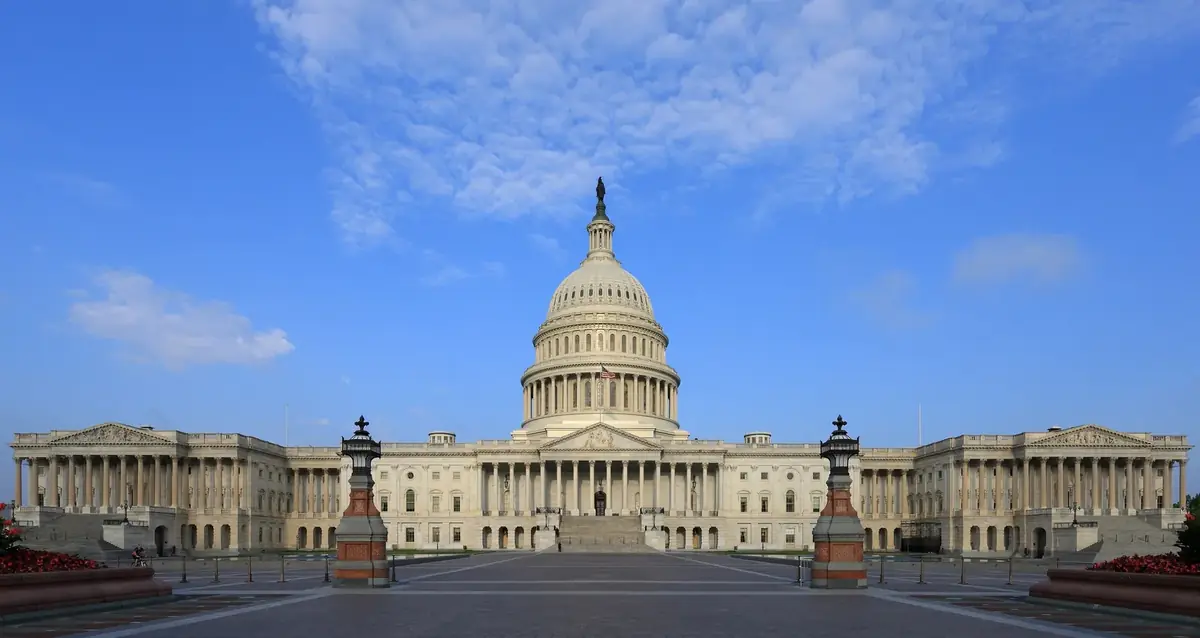
- The United States. Executive Order 14434 of 29 September 2026 tells federal agencies to say "Super Intelligence". It defines the term as the technologies the law already calls artificial intelligence, so it is a label, not a new category. See our explainer of the order.
- The United Kingdom. A private member's bill to prohibit artificial superintelligence was introduced in the House of Commons on 8 September 2026, according to news and law-firm summaries. Private members' bills rarely become law. The government said, as reported by The Next Web, that it did not consider the measures proposed in the bill to be the right approach, and that it was exploring whether targeted interventions might be needed in future.
Researchers and companies use the word more freely. See our guide to superintelligence vs AGI for what they mean by it.
The comparison
| Actor | Binding law on powerful AI? | Main emphasis | Superintelligence language |
|---|---|---|---|
| European Union | Yes. The AI Act, with duties on general-purpose models from August 2025. | Risk-based safety and rights | None found. Uses "systemic risk". |
| United Kingdom | No AI statute. The AI Security Institute is a research body. | Security testing, plus a pro-innovation approach | A private bill would ban it. The government opposes the bill. |
| China | Not verified here. No single AI law seen in the sources we read. | Development, sovereignty, human control, UN-centred governance | AGI appears once, in a draft five-year-plan phrase. |
| India | No AI law. "Existing legislation wherever possible." | Innovation, inclusion, access for the Global South | None. The prime minister cited the "paper clip problem". |
| United States | No federal AI statute. A push to override state laws. | Winning the race, national security evaluation | Adopted as a federal label by executive order. |
| United Nations | No. Advisory panel and dialogue. | Evidence, human rights, capacity, human control | A panel brief on "loss of human control". |
| Council of Europe | Treaty not yet in force. | Human rights, democracy, rule of law | None. |
Each approach in brief
European Union: binding, risk-based
The AI Act's duties for general-purpose AI model providers have applied since 2 August 2025, according to the European Commission, and the Commission's enforcement powers, including fines, begin on 2 August 2026. Providers of models that pose systemic risks must notify the AI Office. A voluntary code of practice helps them show compliance. In July 2026 the Digital Omnibus (Regulation 2026/1744) came into force, moving high-risk obligations to 2 December 2027, and to 2 August 2028 for AI built into regulated products. Our guide to the EU AI Act for small teams covers the detail.
United Kingdom: test it, do not (yet) legislate it
The AI Safety Institute was renamed the AI Security Institute in February 2025. Its stated mandate is "equipping governments with a scientific understanding of the risks posed by advanced AI", with research on control and autonomy, including systems "evading attempts to control them". The government's January 2025 Opportunities Action Plan takes a pro-innovation approach to regulation. We found no government frontier-AI bill. Law-firm analysis cited by news reports expects the next King's Speech late in 2027.
China: build, with a hand on the wheel
China's July 2025 Global AI Governance Action Plan calls the United Nations "the main channel" and includes building risk testing and evaluation systems. The State Council's August 2025 "AI Plus" opinions set adoption targets of more than 70% penetration of new-generation intelligent terminals and AI agents by 2027 and more than 90% by 2030. At the July 2026 World AI Conference, President Xi called for AI to be "always under human control" and for measures to "forestall loss of control", according to the Xinhua text. A new World AI Cooperation Organization was announced to be based in Shanghai. The draft 15th Five-Year Plan outline of March 2026 says to "explore development paths of artificial general intelligence".
India: use what exists, include everyone
The IndiaAI Mission was approved in March 2024 with an outlay of Rs 10,371.92 crore. The India AI Governance Guidelines of November 2025 do not propose a standalone AI law. The IT secretary said, "Our focus remains on using existing legislation wherever possible." At the February 2026 AI Impact Summit in New Delhi, the declaration was voluntary and non-binding, and on security it referred only to industry-led voluntary measures. The Press Information Bureau said 92 countries and organizations had endorsed it by early March, including the United States and China. Prime Minister Modi did not use the words AGI or superintelligence in his plenary remarks as published. He did cite the "paper clip problem", the thought experiment about a machine with a single goal.
United States: win the race
The July 2025 Action Plan begins "The United States is in a race to achieve global dominance in artificial intelligence". There is no federal AI statute. An executive order in December 2025 targeted state laws and a March 2026 framework asked Congress to override them, according to summaries. The September 2026 order renamed AI inside federal documents. All of this is covered in our explainer.
United Nations: advise and convene
The Independent International Scientific Panel on AI has 40 members, with co-chairs Yoshua Bengio and Maria Ressa, who were elected in March 2026. It is not a regulator. The first Global Dialogue on AI Governance took place in Geneva on 6 and 7 July 2026, with a second session planned for New York in May 2027. The International AI Safety Report 2026, chaired by Bengio, describes loss of control as scenarios where AI systems operate "outside of anyone's control", and says current systems show early warning signs only.
Council of Europe: a treaty waiting to start
The Council of Europe's AI convention opened for signature in September 2024, and the UK and the US signed on the first day. As of 17 October 2026, the treaty chart shows one ratification, by the EU in May 2026. It enters into force after five, including at least three Council of Europe members.
Summits tell a story too. In February 2025 at the Paris summit, 63 countries signed a statement on inclusive and sustainable AI, but the US and UK did not. A year later in New Delhi, the US, UK and China all endorsed the declaration, which is voluntary and focused on diffusion and growth. The mood moved from risk to impact.
What the public thinks
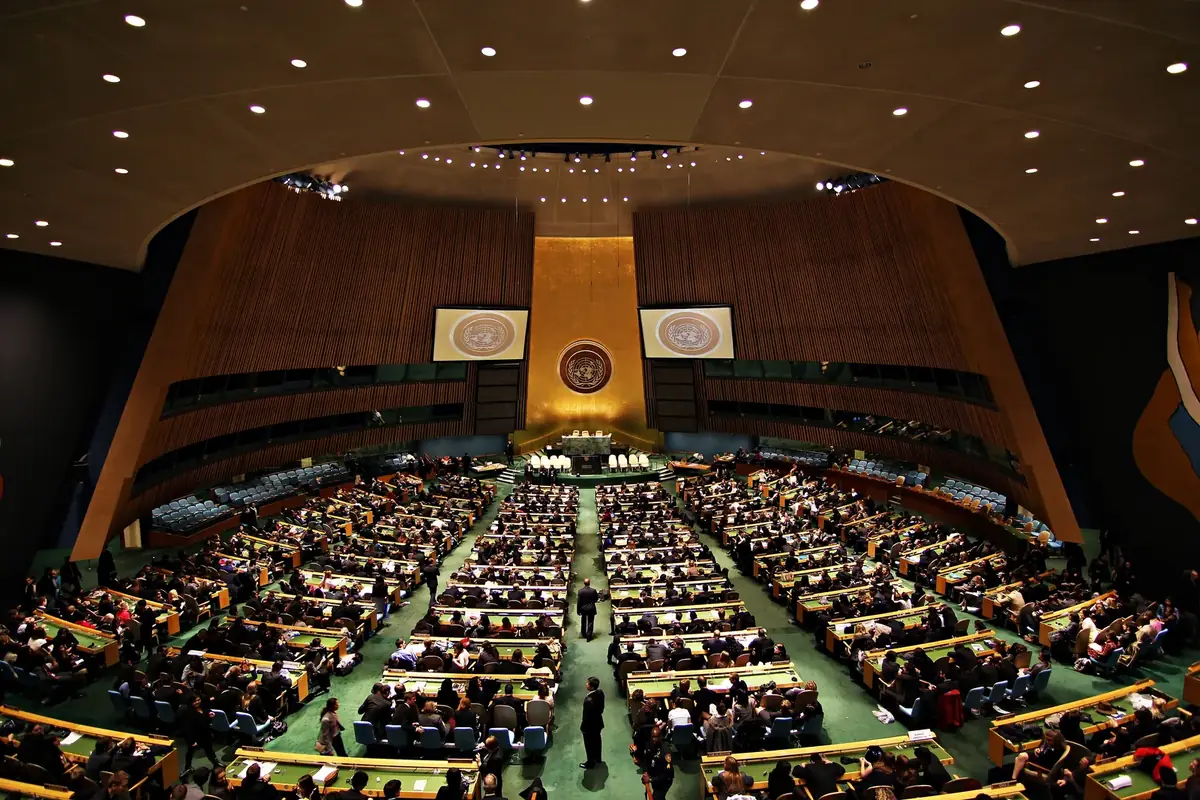
Pew's 2025 survey of 25 countries found a median of 34% more concerned than excited about AI, 42% equally both, and 16% more excited. Trust in one's own country to regulate AI effectively varied widely: medians of 53% for the EU, 37% for the United States and 27% for China, while in India 89% said they trusted their own country to regulate it. Pew did not ask about superintelligence.
On superintelligence specifically, the best-known poll comes from an advocacy group. A Future of Life Institute poll of 2,000 US adults in autumn 2025 found 64% said superhuman AI should be developed only once proven safe and controllable, or never, and 5% supported building it as fast as possible. It is US-only and from a campaigning organization, so read it as one data point.
What to watch next
- Late November 2026The US federal definition proposal due under Executive Order 14434.
- 13 November 2026The provisional second reading date reported for the UK bill. It is a private member's bill, so treat its odds with caution.
- 2 December 2026New EU bans and the marking deadline for generative systems already on the market, under the Digital Omnibus.
- End of 2026A civil-society campaign, the Global Call for AI Red Lines, asks governments for an international agreement on red lines by the end of the year. It is not a government instrument.
- May 2027The second UN Global Dialogue on AI Governance in New York.
Questions people ask
Which country has a law on superintelligence?
None that we found. The EU has a binding AI Act that covers general-purpose AI models and systemic risk, but we found no official EU text that uses the word superintelligence. In the UK, a private member's bill to prohibit artificial superintelligence was introduced in September 2026, and the government said it did not consider its measures the right approach.
Does China regulate superintelligence?
China's official texts we reviewed focus on development and on keeping AI under human control. President Xi called in July 2026 for measures to forestall loss of control. The draft 15th Five-Year Plan outline uses AGI once, in a phrase about exploring development paths. We did not verify China's sector-specific rules for this guide.
Is the India AI summit declaration binding?
No. The February 2026 New Delhi declaration describes itself as voluntary and non-binding. The Press Information Bureau reports it had been endorsed by 92 countries and organizations by early March 2026, including the United States, China, the UK and the EU.
What is the UN's role?
Advisory. The Independent International Scientific Panel on AI, co-chaired by Yoshua Bengio and Maria Ressa, reports on evidence, and the Global Dialogue on AI Governance is a forum. Neither can make binding rules.
How should a global business plan around these differences?
Treat the EU AI Act as the hard floor if you sell there, watch US federal and state developments separately, and follow the UK and China as direction-setters. Keep one internal standard for oversight and documentation that you can map onto each market.
Selling AI in more than one market?
Geneki can help you map the rules that really apply in each place and build one set of controls and records that works across them.
Talk to usSources
- AI Act: regulatory framework for AI
- Guidelines for providers of general-purpose AI models
- European AI Office
- About the AI Security Institute
- AI Opportunities Action Plan
- Global AI Governance Action Plan
- Xi Jinping's keynote at the World AI Conference
- Draft outline of the 15th Five-Year Plan
- IndiaAI Mission approval
- India AI Governance Guidelines
- AI Impact Summit 2026: outcomes
- Independent International Scientific Panel on AI: FAQ
- International AI Safety Report 2026
- Council of Europe Framework Convention on AI: treaty chart
- How people around the world view AI
- Executive Order 14434: Inaugurating the Era of Super Intelligence
- Our explainer: Trump's Super Intelligence order
This is a comparison of public documents as of October 2026, not legal advice. Some details come from news and law-firm summaries because the primary pages were unavailable, and we say so where it matters. The UK bill's progress after its first reading is not verified. Check current texts before relying on a date.

.jpg)