On this page
The short version
- Executive Order 14434 tells federal agencies to say "Super Intelligence" or "SI" instead of "Artificial Intelligence" or "AI" in their own documents.
- The order defines SI as the same technologies the law already calls AI. It changes the label, not the rules, and it does not bind companies.
- A voluntary industry accord was announced the same day. It has no penalties.
- For a business, the things to watch are the proposed federal definition, the fight over state AI laws and the wording of customer contracts.
What the order says
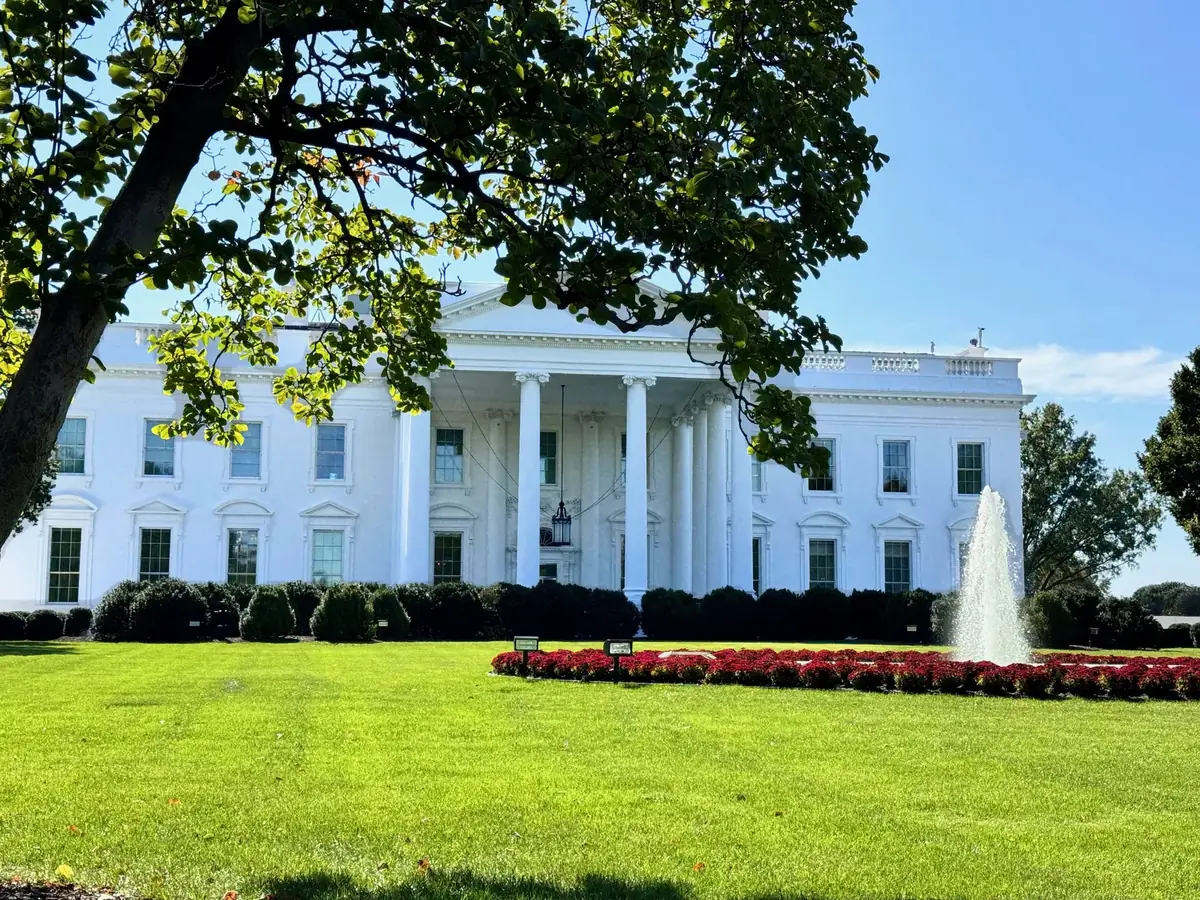
On 29 September 2026 President Trump signed Executive Order 14434, titled "Inaugurating the Era of Super Intelligence". We read the order and the White House fact sheet on whitehouse.gov. Here is what the text actually contains.
- The policy. Section 1 says today's frontier systems "increasingly represent not merely artificial intelligence, but a new era of Super Intelligence". It makes it the policy of the administration that, "to the maximum extent permitted by law", the executive branch uses "Super Intelligence" and "SI" in place of "Artificial Intelligence" and "AI". It adds that the executive branch "will not acknowledge the usage of 'Artificial Intelligence' and 'AI' in any applicable setting".
- What agencies must change. Section 2 applies to official correspondence, public communications, websites, reports, policy documents and other "non-statutory documents within the executive branch". Old regulations, presidential actions, contracts and grants do not need to be altered.
- What the words mean. Section 3 defines "Super Intelligence" and "SI" as the technologies and systems "encompassed by the term 'artificial intelligence' as defined in section 9401(3) of title 15" of the US Code. In other words, the legal definition is unchanged.
- A homework assignment. Within 60 days, the President's science adviser must send the President proposed legislative language for a federal definition of Super Intelligence, including whether it should replace the current statutory definition. Counting from 29 September, that is about 28 November 2026.
- No new rights. Section 4 says the order creates no right or benefit enforceable by anyone against the government.
The fact sheet gives the reason. It says the name "Super Intelligence" better conveys the capabilities being developed, which it says go beyond "imitating or automating human intelligence as is implied by the term 'Artificial Intelligence.'"
What it does not do
| Question | Answer, from the text |
|---|---|
| Does it bind private companies? | No. It directs the executive branch only. |
| Does it create new safety rules? | No. It is about terminology and a definition proposal. |
| Does it change the legal meaning of AI? | Not now. SI is defined as what existing law already calls AI. A new definition would need legislation or further action. |
| Does it rewrite old documents? | No. Past regulations, contracts and grants stay as they are. |
| Does it override state or foreign law? | No. |
One more thing the text does not do: it does not say that today's systems are superintelligent in the technical sense that researchers use. For that meaning, and how it differs from AGI, see our guide to superintelligence vs AGI.
The accord announced the same day
News outlets reported that the White House also announced a voluntary industry accord. Nextgov and Al Jazeera report that executives from companies including Google, Anthropic, Meta, OpenAI, xAI and Nvidia took part. The reports describe layered oversight: internal controls, an internal oversight team, independent outside auditors and an independent committee. Al Jazeera reports that the accord is not legally binding and carries no penalty. Nextgov reports that Vice President Vance rejected an FDA-style or FAA-style regulator for frontier models and said existing agencies already have authority over consumer harms.
Voluntary does not mean empty. Customers, insurers and investors often treat a published commitment as a benchmark. The four oversight layers are a useful checklist for your own AI governance, whether or not you are a frontier lab.
The policy record so far
The name change sits on top of a policy direction that began in January 2025.
- January 2025Executive Order 14179 states a policy "to sustain and enhance America's global AI dominance" and revokes the Biden administration's AI safety order, EO 14110.
- July 2025America's AI Action Plan sets out three pillars: accelerate innovation, build infrastructure and lead in international AI diplomacy and security. Its introduction says "The United States is in a race to achieve global dominance in artificial intelligence". The plan does not use the words AGI or superintelligence, in the text we read.
- December 2025Executive Order 14365 targets state AI laws. According to the White House fact sheet it creates a Justice Department AI litigation task force, and it quotes the President: "We MUST have one Federal Standard instead of a patchwork of 50 State Regulatory Regimes."
- March 2026The White House released a legislative framework asking Congress to override "unduly burdensome" state laws, according to law-firm and think-tank summaries. The September fact sheet calls it a National Super Intelligence Policy Framework.
- September 2026Executive Order 14434 and the voluntary accord.
It is worth noticing how the vocabulary moved. In 2025, administration officials described "AGI" and "superintelligence" talk as a distraction. MIT Technology Review quoted the White House AI adviser Sriram Krishnan saying that "this notion of imminent AGI has been a distraction and harmful and now effectively proven wrong". A year later, the administration itself adopted "Super Intelligence" as its official label. We report both facts side by side and leave the conclusions to you.
Why: the stated reasons and the readings
We cannot know anyone's private motives, so we separate what was said from what others infer.
What the administration says
- The fact sheet says the name should reflect "the limitless promise" of the technology, and that the United States leads the world in it.
- The wider agenda is stated in the Action Plan: winning a race. Its introduction says "The AI race is America's to win". PolitiFact quotes the President as saying that "whoever wins super intelligence wins", and describing the United States and China as the two players.
- At the United Nations, according to MeriTalk, the President's science adviser Michael Kratsios said the United States "totally rejects" a global control scheme for superintelligence and favors "permissionless innovation".
What analysts say
- It is a race and dominance strategy. Brookings and other think tanks read the chip-export loosening and the infrastructure push as part of a competition with China. Brookings' Mark MacCarthy argued in February 2026 that loosening export controls may be right if superintelligence is not imminent.
- It favors light national rules over state ones. Lawfare called the March framework "industry-friendly" and expected Congress to be unlikely to pass it as written. CSIS argued that targeting state laws "undermines rather than advances" US technology leadership.
- The label is branding. PolitiFact quoted outside experts who said a new name could mislead, or fail to reassure a public that polls show to be more concerned than excited. The Pew Research Center found in 2025 that 50% of US adults were more concerned than excited about AI in daily life.
None of these readings can be proven from the documents. Notice also that the people disagreeing are often disagreeing about the facts: whether superintelligence is near. Our guide to what the forecasts really say covers that.
What businesses should watch
- The federal definition, due around 28 NovemberThe science adviser's legislative proposal could widen or replace the statutory definition of AI. Definitions decide which products fall under which rules.
- State laws and the preemption fightFederal pressure on state laws is real, but Congress has not passed a law overriding them as of this writing, and state rules in places such as California and New York still apply. Plan for both.
- Government contract languageIf you sell to US agencies, expect the new vocabulary in solicitations. Check whether your contracts and compliance documents use terms that map cleanly to the statutory definition.
- Voluntary commitments you could mirrorInternal controls, an oversight owner, independent review and a challenge function are good practice at any scale. See our guide to running AI agents safely.
- Your other marketsEU and UK rules did not change on 29 September. See our guide to the EU AI Act for small teams.
Questions people ask
Did Trump ban the term 'AI'?
Only inside the federal executive branch, and only 'to the maximum extent permitted by law'. The order tells agencies to use 'Super Intelligence' and 'SI' in correspondence, public communications, websites, reports and other non-statutory documents. It does not apply to private companies, courts or Congress, and it does not require old regulations, contracts or grants to be rewritten.
Does the order regulate superintelligence?
No. It is about terminology. It defines 'Super Intelligence' as the technologies and systems already covered by the statutory definition of artificial intelligence in 15 U.S.C. 9401(3). It also asks the President's science adviser to propose a federal definition within 60 days, which would need legislation.
What is the White House accord on Super Intelligence?
A voluntary commitment announced the same day. News reports say executives from Google, Anthropic, Meta, OpenAI, xAI and Nvidia took part, and that it asks signing companies to use layers of internal and external oversight of frontier model work. It carries no legal penalties, according to reporting by Al Jazeera.
Will this change anything for my business?
Probably not directly. If you sell to the US government you may see the new wording in documents. The things that can affect you are separate: the proposed federal definition, any federal law that overrides state AI laws, and state laws such as those in California, New York and Colorado.
Why did the administration do it?
The White House fact sheet says the new name better reflects the technology's capabilities, which it says go beyond 'imitating or automating human intelligence'. Analysts have offered other readings, covered below. Nobody outside the administration can verify its private motives, so treat motive claims as opinion.
Selling AI into the US, EU or UK?
Geneki helps teams map which rules actually apply to their products, set up sensible internal controls and keep records a regulator or customer would expect.
Talk to usSources
- Executive Order 14434: Inaugurating the Era of Super Intelligence
- Fact sheet: President Donald J. Trump inaugurates the era of Super Intelligence
- Executive Order 14179: Removing barriers to American leadership in artificial intelligence
- America's AI Action Plan
- Fact sheet: ensuring a national policy framework for artificial intelligence
- White House unveils Super Intelligence executive order and industry accord
- How does Trump's White House AI accord work?
- Trump's AI 'super intelligence' push, fact-checked
- White House brings Trump's superintelligence push to UN Security Council
- White House AI framework proposes industry-friendly legislation
- Targeting state AI laws undermines rather than advances US technology leadership
- If superintelligence isn't imminent, the Trump administration may be right to loosen advanced chip export controls
- The AI doomers feel undeterred
- Our explainer: what is AGI?
This is a news explainer, not legal or political advice. The executive order and the fact sheet were read on whitehouse.gov. Reports of speeches, the accord and the March 2026 framework come from the news and policy outlets cited, and details may change. We state what was said and signed, and we do not claim to know anyone's private motives.